For this project Mr. Rothemich had our class divide and research the characteristics of civilization and create a class presentation on them. Our slides are on the topic of ______. Please enjoy.
Sources included in the show.
Thursday, November 9, 2017
Tuesday, October 31, 2017
*Example Post Project# 5* The Drawn of Civilization in a Picture!
For this project Mr. Rothemich had us draw an image showing the relationship between Agriculture, Settlement, Population Growth and how that Connects to Civilization. Here are my pictures please enjoy.
Sources:
Crash Course History: Agriculture Revolution Video
Agricultural Revolution Lecture Video
NPR Population Growth Video
| In this picture students showed how agriculture led to permanent settlements and how these two things led to population growth and eventually to civilization. |
Sources:
Crash Course History: Agriculture Revolution Video
Agricultural Revolution Lecture Video
NPR Population Growth Video

Thursday, October 12, 2017
Hunter-Gatherer Restaurant Menu or Blueberry Foraging Guide
For this project Mr. Rothemich had us research wild plants that are edible. We did this project in order to connect our lives to the lives of Paleolithic hunter-gatherers that depended on foraging for wild plants to survive. Thanks for checking out my post.
Autumn Olive Scientific Name Elaeagnus Umbellata
The autumn olive is a small tree that can be found..
The autumn olive is a small tree that can be found..
For this project Mr. Rothemich had us research and create a wild menu for a hunter-gatherer meal. We did this project in order to connect our lives today to the lives of Paleolithic hunter-gatherers that depended on wild plants and animals to survive. Thanks for checking out my post.



Sources:
The Nature Conservancy
Friday, February 17, 2017
Ancient Egypt Religion Project
For this project we learned about Ancient Egypt beliefs. Our team created the slides on... Please enjoy.
Thursday, February 16, 2017
Ancient Egypt Religion and Death Project
Our class researched Egyptian religion and beliefs about death for this presentation. Our team created the slides on.... please enjoy.
Friday, January 6, 2017
Example Podcast Review Project # 13
 |
| Sphinx of Tahraqo Link to Photo |
For this project Mr. Rothemich had us examine two multimedia sources on the Ancient Nubian's. We had to answer several questions on these documentaries trying to work out what the central message of the documentaries was.
Title: The History of the World in 100 Objects
Type of Media: Podcast
Date Released: 2010
Principle maker(s): The British Museum and BBC Radio 4
Link to Source: http://www.bbc.co.uk/ahistoryoftheworld/about/transcripts/episode22/Some might think that the central message of this podcast on the Sphinx of Tahraqo was about water rights or control. I think the central message of this podcast is not about control of resources but conflict between cultures and ultimately how culture blend together. They spend a lot of time discussing the physical features of the Sphinx and how it blends traditional Egyptian Sphinx design such as the paws and the shape of the body with a face of a black African pharaoh, The Sphinx represents the blending of Egyptian and Nubian cultures. This blending of cultures and ideas is still continuing to this day. Sometimes peacefully and sometimes forcefully which the Nubian conquest of Egypt shows has been happening throughout history.
I think the trouble the Podcasts have is that we have become a very visual society. We expect to see moving images while being entertained and even while learning now. This Podcast does a great job though of creating an image in your mind, you can easily imagine faraway lands in Africa and even make connections to a distant past. In general it does an excellent job communicating its central message.
I think the creators wanted us to respond with a new sense of respect for less powerful people and cultures in society. As they mentioned in the podcast normally Egypt looked on Nubia as a place of rich resources but during a time of Egyptian weakness the Nubian's conquered their more powerful neighbor to the North and then began combining the two cultures together, the Sphinx of Tahraqo is a symbol of an often forgotten or ignored African culture.
Title: Story of Nubia
Type of Media: Documentary
Date Released: Uploaded on YouTube in 2011
Principle maker(s): Royal Ontario Museum
Link to Source: https://www.youtube.com/watch?v=_AyimQ4Nx4oThis is where I would continue my review answering the three questions on the Documentary Review Worksheet.
Tuesday, December 6, 2016
Example of Polytheism Blog >EGYPT
For this project Mr. Rothemich had us research and learn about the religious beliefs of the Ancient Egyptians. The Ancient Egyptians were Polytheists meaning they believed in many gods. The Egyptians believed that many hundreds even thousands of gods existed. These gods controlled all aspects of nature, from the rising and the setting of the sun to the annual flood of the Nile River.
Interesting Fact: Many Egyptian gods and goddesses were depicted with human bodies and animal heads.
According to Egyptian mythology, humans were created from the tears of a god. Humans as a creation of the gods were put in charge of maintaining balance and order in the universe which the Egyptians called Maat. It was important that humans do what is right and good in order for Maat to be maintained and for order to triumph over chaos..
In my research I found the God Osiris particularly interesting. Osiris was the god of the underworld protector of the dead. Egyptian religion taught that when a pharaoh died he would become Osiris and rule over his good and loyal subjects that had died before him.
Here is where you write your paragraph on the Epic of Gilgamesh answering the following three questions based on what you have learned in Social Studies and ELA 2.
British Museum Site for Kids
Ancient History Encyclopedia
Big Myth APP
Image of Osiris
Interesting Fact: Many Egyptian gods and goddesses were depicted with human bodies and animal heads.
_(Vall%C3%A9e_des_Rois_Th%C3%A8bes_ouest)_-4.jpg) |
| A variety of Egyptian gods and goddesses. |
According to Egyptian mythology, humans were created from the tears of a god. Humans as a creation of the gods were put in charge of maintaining balance and order in the universe which the Egyptians called Maat. It was important that humans do what is right and good in order for Maat to be maintained and for order to triumph over chaos..
In my research I found the God Osiris particularly interesting. Osiris was the god of the underworld protector of the dead. Egyptian religion taught that when a pharaoh died he would become Osiris and rule over his good and loyal subjects that had died before him.
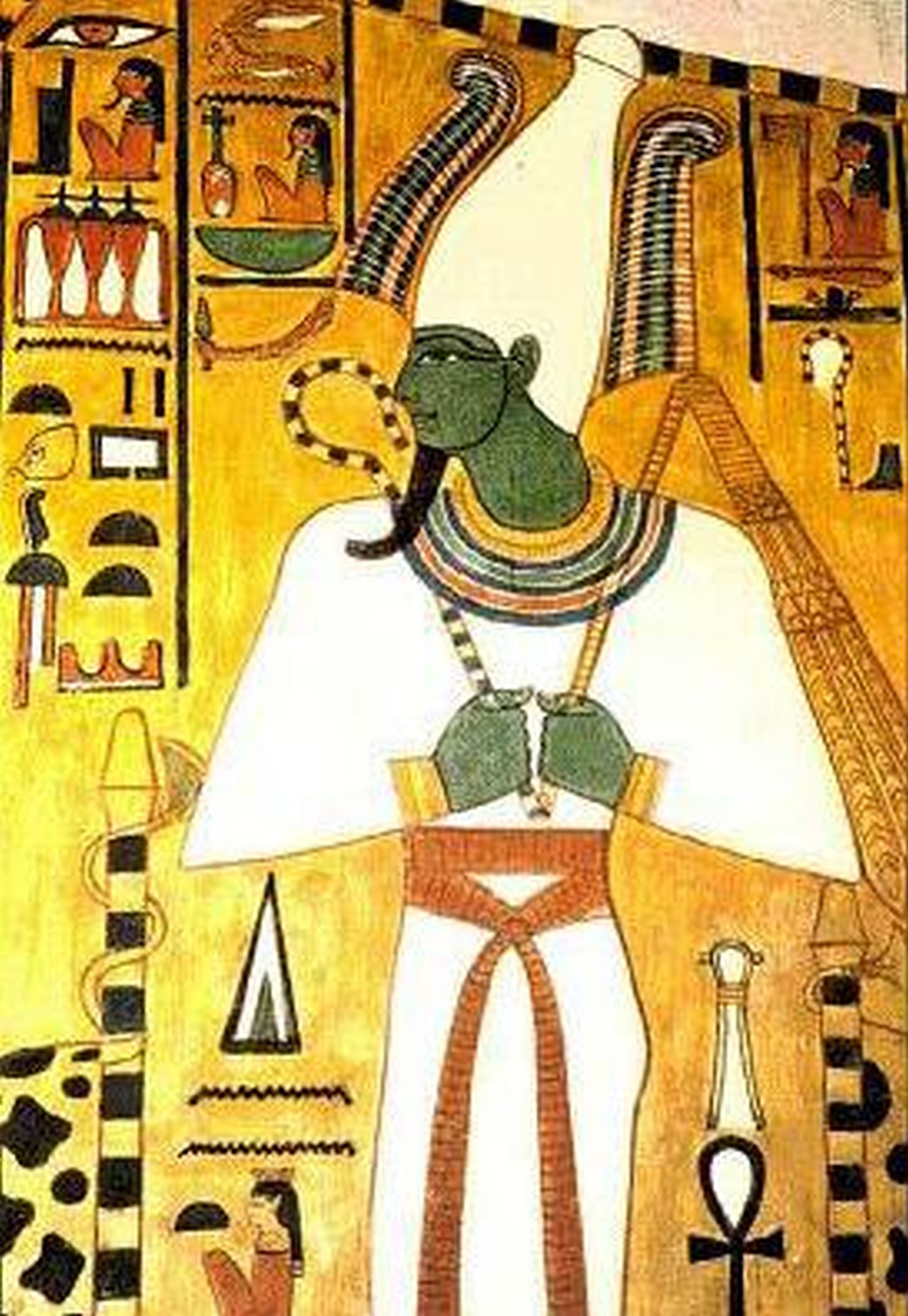 |
| This is an image of Osiris from the tomb of Queen Nefertari. |
- What is the Epic of Gilgamesh?
- Why is it important?
- Summarize the story and main theme of the Epic of Gilgamesh.
Sources:
Definition of Polytheism British Museum Site for Kids
Ancient History Encyclopedia
Big Myth APP
Image of Osiris
Subscribe to:
Posts (Atom)